GHK‑Cu vs AHK‑Cu: which copper peptide do you need?
Same chemistry, different jobs. GHK‑Cu is for your face, AHK‑Cu is for your scalp. Here is how they compare.
The short answer
Choose GHK‑Cu for your face: anti-aging serums, firming and collagen-support creams, eye-area serums. Choose AHK‑Cu for your scalp: hair-growth serums, tonics, shampoos and conditioners. Plenty of people use both, each in its own product.
Side by side
| GHK‑Cu | AHK‑Cu | |
|---|---|---|
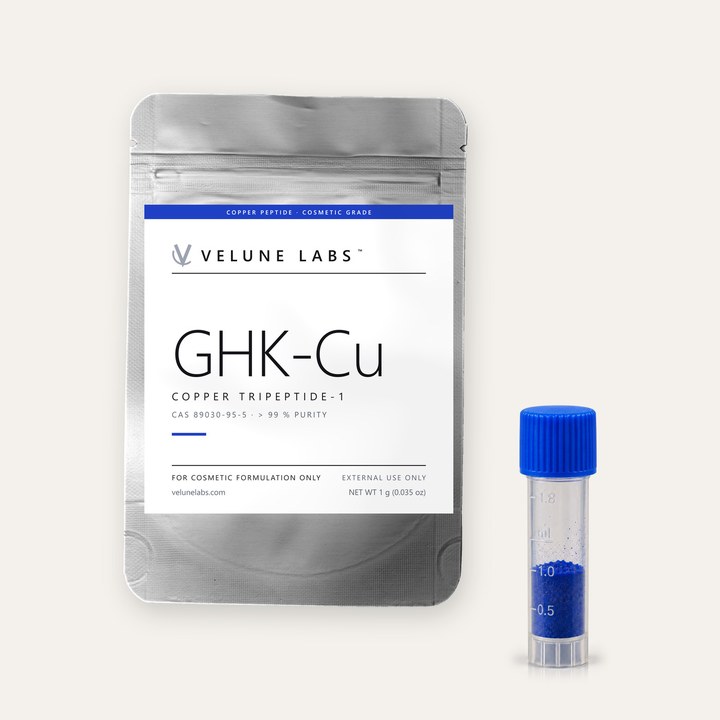
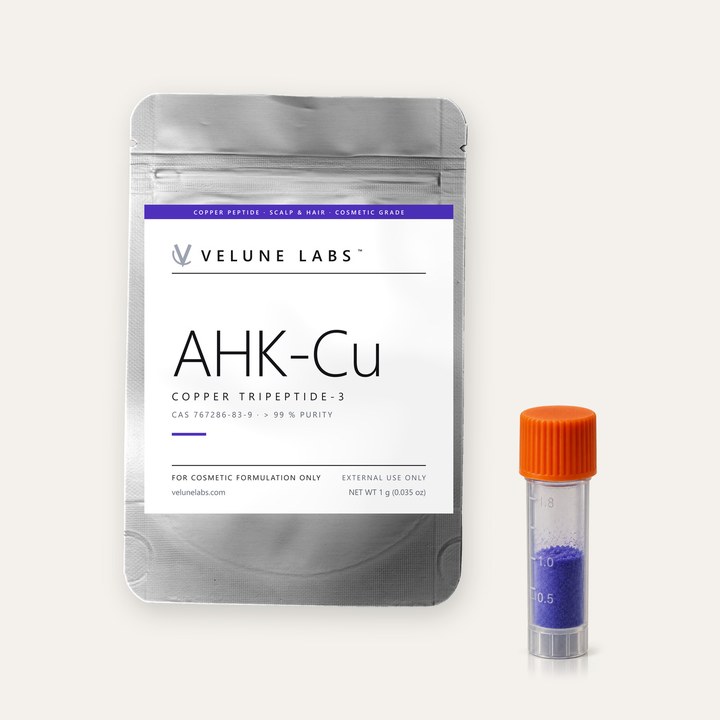
| INCI name | Copper Tripeptide-1 | Copper Tripeptide-3 |
| Peptide | Glycine-histidine-lysine + copper | Alanine-histidine-lysine + copper |
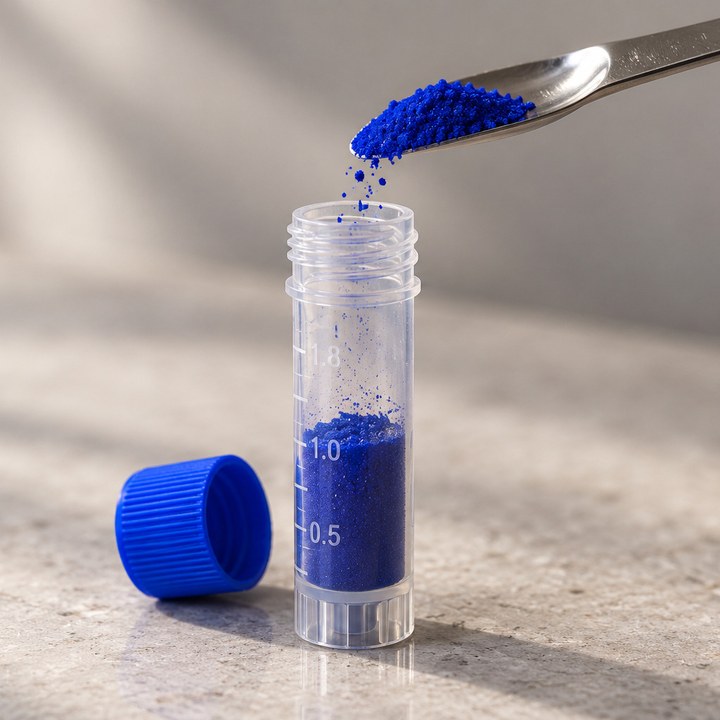
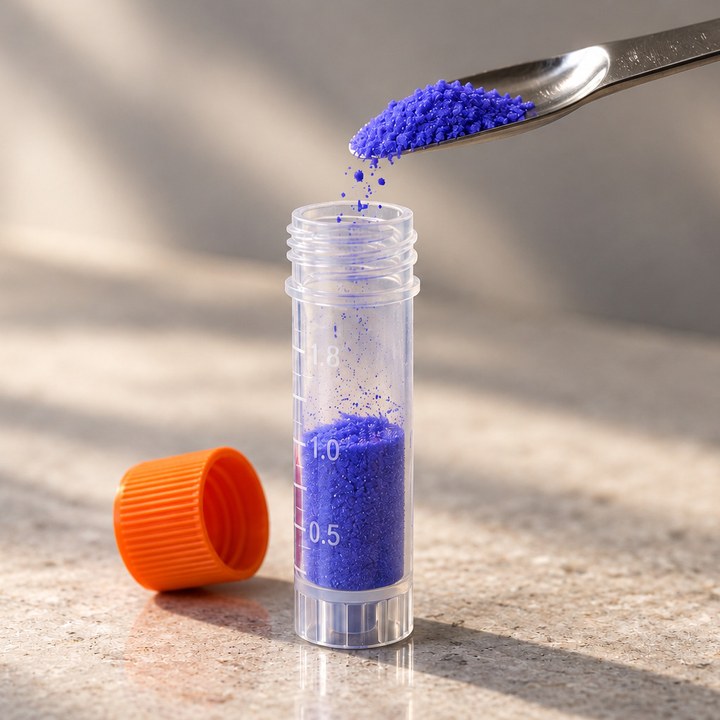
| Color | Blue | Blue-violet |
| Best for | Face: anti-aging, firming and eye-area serums, creams | Scalp: hair-growth serums, tonics, shampoos |
| Stock solution | 1 g + 20 mL water (5%) | 1 g + 20 mL water (5%) |
| Standard dose | ½ tsp stock per 100 g (≈ 0.12%) | ½ tsp stock per 100 g (≈ 0.12%) |
| Shelf life, unopened | 24 months | 18 months |
| HPLC purity, current lot | 99.57% (lot ZXP-T7QB) | 99.6% (lot 9T2-ZHFP) |
| Price, 1 g | $24.95 | $29.95 |
How they differ
Both are copper tripeptides: three amino acids holding a copper ion. GHK‑Cu is the original. It was first isolated from human plasma in the 1970s and is the most studied peptide in skincare. AHK‑Cu swaps glycine for alanine, and formulators favor it for scalp and hair products.
Can I use them together?
Yes, in separate products. Keep GHK‑Cu in your face serum and AHK‑Cu in its own water-based scalp product, and don't premix AHK‑Cu into minoxidil or high-alcohol solutions. Both follow the same rules: pH 5 to 7, no vitamin C or EDTA in the same bottle, added last and below 104°F (40°C).
How much to buy
One gram of either makes about 800 g of finished product, or 27 one-ounce bottles at the standard level. For one person that is many months of serum. The dosage calculator works out the amount for any batch size.